TEMPERATURE CONTROL
Refrigerated Circulating Baths & -80°C Ultra-Low Temperature Baths
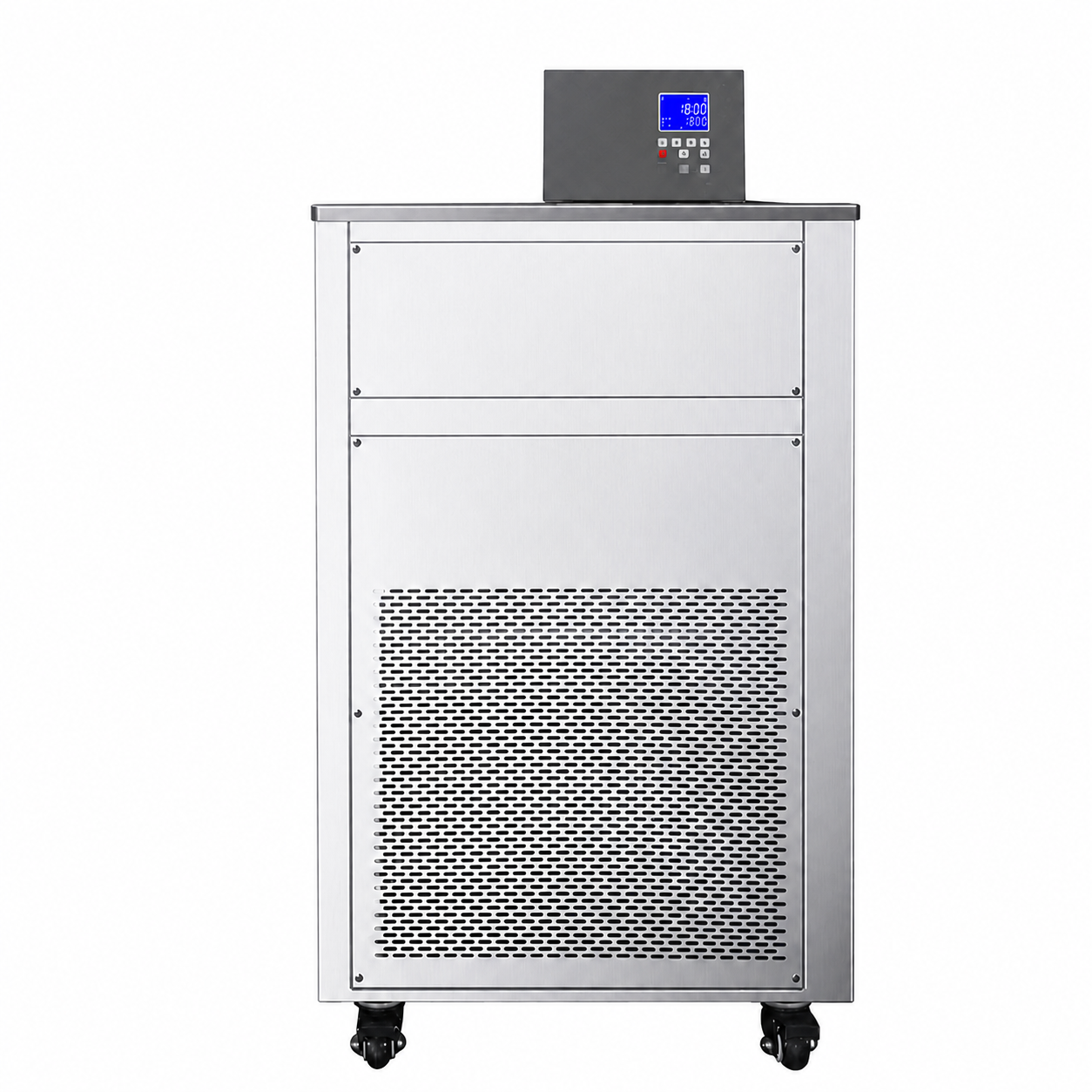
Refrigerated circulating baths combine an accessible liquid bath with active heating, cascade refrigeration, and fluid circulation. They are selected for direct sample immersion, low-temperature material conditioning, sensor and logger comparison, controlled reaction support, and external equipment loops where working range, cooling capacity, stability, bath geometry, pump performance, and fluid compatibility must be evaluated together.
How to select a refrigerated circulating bath
Temperature range
Confirm the required minimum and maximum setpoints plus ambient conditions and expected heat load. A published minimum is normally a no-load capability unless stated otherwise.
Cooling capacity curve
Request capacity at the operating temperatures that matter to the application, not only the maximum capacity near room temperature.
Working space
Match the usable bath opening, depth, and fluid volume to the specimen, calibration probes, vessel, or immersion fixture.
Pump and external loop
For external circulation, confirm flow, pressure, connection size, hose compatibility, elevation, and pressure drop through the connected equipment.
Available Products
1 product in this category
Compliance & Standards
All products in the Refrigerated Circulating Baths category comply with international testing standards including:
ASTM Standards
EN Standards
AASHTO Standards
BS Standards
ISO Standards
Frequently Asked Questions
Ready to Find Your Solution?
Our experts can help you select the perfect liquid baths & circulating temperature control equipment for your specific needs.